Cyber Security for SMEs: The Complete 2026 Guide to Risk in the Age of AI
9 min read · AstraLoop Studio
If you run a small or medium-sized business and think you're too small to end up in the crosshairs of a cyberattack, the 2026 numbers say the exact opposite. The 2026 Clusit Report (the Italian association for information security) shows a country that alone accounts for roughly 10% of serious incidents worldwide, with a 23% increase in serious attacks in the first months of the year and vulnerability exploitation up 65% compared to 2024. The number that matters most to you is another one: SMEs now make up 72% of the targets.
This guide isn't another list of scare tactics. It's a practical read on the 2026 threat landscape and, above all, the concrete defense priorities an SME should focus on when resources are limited. We're talking about financial risk and liability, not tech jargon. If you want the full operational picture, this article is one piece of our cybersecurity audit guide for SMEs, the hub from which every deep dive in this cluster branches out.
Why 2026 is different: AI has changed the rules of the game
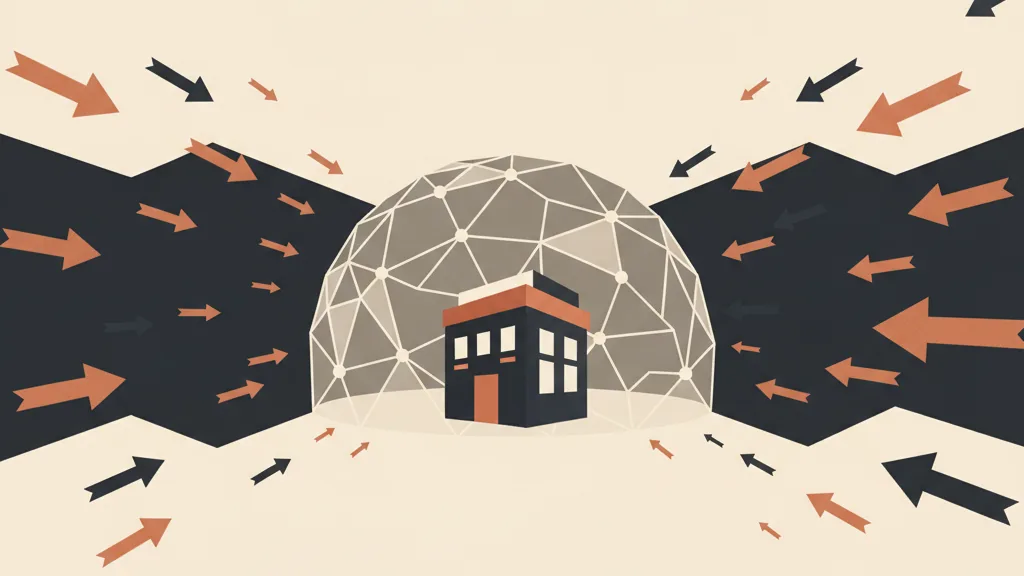
Until a couple of years ago, a well-crafted attack required skill, time and a decent grasp of the victim's language. Generative AI has knocked down all three barriers. Today an attacker can write phishing emails in flawless Italian, clone an executive's voice, and automate the search for flaws across thousands of sites in parallel. The result is that the volume and quality of attacks have grown together — a combination that simply didn't exist before.
The Clusit Report is blunt about it: the 65% rise in vulnerability exploitation isn't random — it's driven by automated tools scanning the web for unpatched systems. For an SME running an unpatched management system or a WordPress site with outdated plugins, that means going from unlikely target to a target one click away.
AI-powered attacks: what actually changes
Three concrete developments worth keeping on your radar:
- Hyper-realistic phishing. No more clumsy, misspelled emails: messages now mimic your company's tone, logo and internal processes. Spotting them takes method, not just instinct. If you want to train your team, we wrote a guide on how to recognize corporate phishing.
- Voice deepfakes and vishing. In Italy, audio deepfakes have grown by over 300% since 2023. The textbook case: an SME in Lombardy transferred €28,000 after a phone call in which the cloned voice of the "CFO" gave urgent payment instructions. The mechanism is explained in detail in our piece on the CEO deepfake scam.
- AI botnets and mass scanning. Automated systems that test known vulnerabilities across entire industries, hitting whoever has fallen behind on updates.
The insider threat almost no one measures: Shadow AI
There's a 2026 risk that doesn't come from outside but from within the company, and it's almost always well-intentioned. It's called Shadow AI (or BYOAI, "bring your own AI"): employees pasting company data into ChatGPT, Gemini or Copilot to work faster. The numbers are striking. Roughly 38% of workers admit to having shared confidential information with AI tools, and 78% bring their own AI tools into the workplace, entirely outside IT's control.
The problem is twofold. On one side, data leakage: quotes, price lists, customer data, source code ending up in third-party systems. On the other, the risk of GDPR and AI Act violations, since that data can include personal information processed without a legal basis or adequate safeguards. It's a topic security firms rarely cover in depth, which is why we treat it as its own area: if you want to understand the scope of the issue, read what Shadow AI is and what risks it carries.
The fix here isn't banning it (that doesn't work) — it's governing it: clear policies, approved company tools, training. And it's exactly the kind of usage a modern audit should map out.
Ransomware in Italy: no longer just encryption, but multi-layered extortion
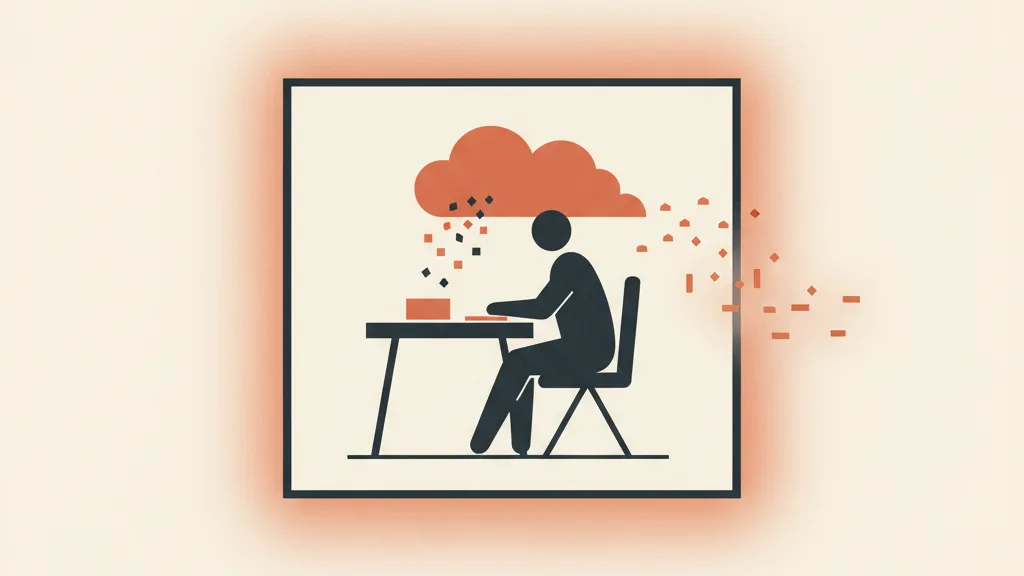
Ransomware remains the threat with the most direct financial impact on SMEs, but in 2026 it has changed shape. It no longer just encrypts files and demands a ransom for the key. Three techniques now dominate.
- Double extortion. First they steal your data, then they encrypt it. If you don't pay, they publish it.
- Triple extortion. They add pressure by targeting the customers and suppliers whose data was stolen, or launch DDoS attacks to force your hand.
- Data corruption and selective leaks. Instead of encrypting everything, they corrupt or leak targeted portions, making recovery harder and the extortion more credible.
The average cost for an SME hit by ransomware ranges from €35,000 to €250,000, between the ransom (when paid), operational downtime, recovery and reputational damage. And downtime often costs more than the ransom itself. To learn how to concretely reduce your attack surface, we've dedicated a guide to how to protect against ransomware in Italy.
The risk that comes in through the back door: the supply chain
An attacker doesn't need to breach you directly: breaching one of your suppliers is enough. Supply chain compromises have grown roughly fourfold in five years, and today 30% of breaches involve a third party: a software vendor, a consultant with system access, a cloud service.
Vetting your suppliers is no longer just good practice. Under the NIS2 directive, for companies it covers, verifying supply chain security is now an explicit obligation. And even if your SME isn't directly subject to NIS2, one of your larger clients often is — and they'll demand guarantees down the chain. In practice, someone else's compliance becomes your own commercial requirement.
The 2026 regulatory picture: three deadlines to mark down
2026 is the year several regulations move from theory to practice. This section is informational, not legal advice, but these dates matter because they shift liability directly onto whoever runs the company.
| Regulation | What changes in 2026 | Why it matters to you |
|---|---|---|
| NIS2 | Incident reporting from January 1, 2026; baseline measures by October 2026 | Direct liability for the CEO and the board, no longer delegable to IT |
| AI Act (EU Reg. 2024/1689) | High-risk system obligations from August 2, 2026; ACN oversight from August 3 | Fines up to €35 million or 7% of turnover |
| GDPR | Established framework, but now intersecting with Shadow AI and data breaches | Breach notification to the Data Protection Authority within 72 hours |
The trickiest part of NIS2 is that liability is no longer delegable: security governance answers to the board. If you want to check your position, start by finding out whether NIS2 applies to your company and by reviewing the 2026 NIS2 deadlines. On the AI front, it's worth clarifying the AI Act obligations for SMEs.
The real opportunity (and the gap almost no one covers) is tackling NIS2, the AI Act and GDPR together instead of in silos. These are three overlapping frameworks touching data, processes and liability: an integrated audit avoids paying three times for the same work.
Want to know where your business is truly exposed before attackers find out first? Request a risk-level assessment: we'll tell you exactly what to focus on, no scare tactics.
Website and e-commerce vulnerabilities: the most exposed front
If you run a website or an online store, this is probably your weakest door. In 2025 alone, 11,334 new WordPress vulnerabilities were discovered (up 42% year over year), and 97% of them live in third-party plugins and themes, not in the core. Sites are attacked on average every 32 minutes, and the AI botnets used for scanning have grown by 45%.
The practical takeaway: an outdated plugin, or one abandoned by its developer, is an open invitation. If you run a storefront or online shop, it's worth digging into WordPress plugin vulnerabilities and the specific countermeasures for e-commerce cybersecurity.
Defense priorities for an SME: where to actually start
With limited budget and time, the right question isn't "what should I do in theory" but "what cuts risk the most for the least effort." Here's a realistic order of priorities.
- Tested, offline backups. This is defense number one against ransomware. A backup you've never tried to restore isn't a backup, it's a hope. Rule of thumb: keep at least one copy isolated from the network.
- Multi-factor authentication (MFA) everywhere. Email, ERP, admin access, online banking. It blocks the vast majority of stolen-credential attacks.
- Updates and patches. The 65% rise in vulnerability exploitation hits whoever falls behind. Operating system, business software, CMS, plugins: keep everything current.
- Anti-fraud procedures for payments. Against deepfakes and CEO scams: no urgent wire transfer goes out on a phone call or email alone. Always double-confirm through a different channel.
- Shadow AI governance. Clear policies on which AI tools can be used and with what data. Better to provide an approved company tool than to chase down bans.
- Staff training. People remain both the number one target and the number one defense. Even just a couple of sessions a year move the needle.
These six moves cover the vast majority of scenarios in the Clusit Report. But knowing where you're actually exposed takes an objective snapshot of your systems, not a generic checklist. It's the difference between applying good practices and knowing which ones matter for you. If you want to understand the distinction between the two technical verification approaches, it's worth reading about the difference between a vulnerability assessment and a penetration test.
What it costs to do nothing
The economics are simpler than they seem. A data breach at an SME brings direct and indirect costs that add up fast: operational downtime, recovery, potential fines, lost customers, higher insurance premiums. Before deciding how much to invest in defense, it's worth laying out the numbers, which we do in detail in our analysis of the real cost of a data breach and the ROI of prevention.
There's also a lever almost no one connects to security: insurability. Cyber insurance policies are increasingly selective and often require minimum standards (MFA, backups, vulnerability management) to be underwritten — or to avoid having a claim denied. A well-done audit doesn't just protect you: it makes your company insurable on sensible terms.
In summary
2026 doesn't bring new categories of threats — it brings old threats made far more effective by AI, plus a regulatory framework that shifts liability onto company leadership. For an SME, the path forward isn't spending everything at once, but securing the basics (backups, MFA, patching, payment procedures), governing internal AI use, and periodically checking where you're exposed. Security isn't a product you buy once: it's a process you keep under control. The first concrete step is knowing, with real data in hand, what your risk level is today.
Frequently asked questions
What does the 2026 Clusit Report say about Italian SMEs?
The 2026 Clusit Report shows Italy accounts for roughly 10% of serious incidents worldwide, with a 23% increase in serious attacks and a 65% rise in vulnerability exploitation compared to 2024. SMEs make up 72% of the targets, so they're no longer a marginal target — they're the main one.
Why are 2026's cyberattacks more dangerous?
Because AI has lowered the barriers for attackers: phishing in flawless Italian, voice deepfakes for CEO scams (up 300% in Italy since 2023), and automated botnets scanning the web for unpatched systems. Attack volume and quality are rising together.
What is Shadow AI and why is it a risk for my business?
It's the uncontrolled use of AI tools like ChatGPT or Copilot by employees, who paste in company data. Roughly 38% of workers share confidential information this way. The risk is twofold: data leaking to third parties and possible GDPR and AI Act violations. It's managed with policy and approved tools, not bans.
Does NIS2 apply to small businesses too?
It depends on your sector and size, but even if your SME isn't directly covered, your larger clients often are — and they'll ask you, as a supplier, for security guarantees. From January 1, 2026, incident reporting kicks in, and baseline measures must be in place by October 2026. Responsibility sits with the board, no longer delegable to IT.
How much does a ransomware attack cost an SME?
The average cost for an SME hit by ransomware ranges from €35,000 to €250,000, factoring in any ransom paid, operational downtime, system recovery and reputational damage. Downtime often costs more than the ransom itself. In 2026, ransomware has evolved toward double and triple extortion and data corruption.
Where should an SME start to get secure?
With the high-impact, low-effort basics: tested offline backups, MFA everywhere, constant updates and patching, anti-fraud payment procedures, Shadow AI governance and staff training. Then an audit to know, with real data, where you're actually exposed.
The first step is having an objective picture of your risk. Talk to us: we'll assess threats, priorities and NIS2, AI Act and GDPR compliance together for your SME.