How Much Does a Cybersecurity Audit Cost for a Business
9 min read · AstraLoop Studio
When someone offers you a cybersecurity audit, the first question you ask is always the same: how much is this going to cost me. It's a fair question, because out there you'll find quotes for €800 and quotes for €30,000, apparently for the same thing. They're not. The gap between those two numbers isn't the seller's margin. It's what's actually inside, who performs it, and how deep it goes.
Here we give you the real price ranges for an Italian SMB in 2026, explain what a serious package should include, how long the work takes, and above all help you run the one calculation that actually matters: the cost of the audit against the cost of an incident you didn't prevent. Because security isn't judged in isolation. It's judged against the risk you're actually carrying.
What drives the price of an audit
A cybersecurity audit doesn't have a fixed price list because it depends on four concrete variables. Understanding them will help you read a quote and tell a real engagement apart from a rebranded automated scan.
- The surface being analyzed. How many servers, how many workstations, how many services exposed to the internet, how many web applications, how many cloud environments. An SMB with a cloud-based ERP and 15 workstations is a different job from a manufacturer with an OT network, connected machinery, and three sites.
- The depth. An automated vulnerability assessment that scans and spits out a report is one thing. A penetration test where a professional actually tries to break in, chaining vulnerabilities together the way a real attacker would, is another. The difference between a vulnerability assessment and a penetration test is the main reason two quotes can differ by an order of magnitude.
- Who runs it. An automated tool is cheap because there's no human work behind it. An audit run by analysts who interpret the results, filter out false positives, and hand you a prioritized remediation plan costs more, because that value comes from a skilled person, not a piece of software.
- The goal. A purely technical audit is different from one aimed at compliance (NIS2, GDPR, the AI Act) or cyber insurability. If you need a document proving you performed due diligence for your policy or a regulatory obligation, the scope widens — and so does the cost.
Real price ranges for an SMB in 2026
With that said, let's get to the numbers. These are Italian market ranges for SMBs, not binding quotes: they're here to orient you and help you spot an offer that's out of scale, whether too low or too high.
| Type of engagement | Indicative range | Who it's for |
|---|---|---|
| Automated scan / basic vulnerability assessment | €800 - €3,000 | Microbusiness, first check, small surface |
| Guided vulnerability assessment + interpreted report | €3,000 - €8,000 | SMB that wants a real picture, not just a list |
| Targeted penetration test (web app or network) | €5,000 - €15,000 | Businesses with exposed critical assets (e-commerce, portals, ERPs) |
| Full audit (VA + pentest + compliance + plan) | €10,000 - €30,000+ | Structured SMBs, NIS2 obligations, insurance requirements |
If someone offers you a "complete penetration test" for €500, it's not a penetration test: it's an automated scan with a fancier name. It's fine as a first thermometer reading, but don't confuse it with manual work. For a deeper dive into pricing, check our guides on how much a penetration test costs and the cost of a website security audit.
What the package should include (and what's often missing)
An audit worth its price isn't a PDF containing raw tool output. Here's what you should find in a serious package, and what separates a competent provider from a scan reseller.
The reconnaissance phase
Before scanning anything, a good provider maps your surface: what systems you have, what's exposed, what data you handle, who has access to what. Without this step the audit is blind and risks missing the single most critical asset.
The actual technical analysis
Vulnerability assessment across the whole surface, and penetration testing on the assets that would hurt you most if they went down: the site that sells, the ERP, email, remote access. This is where the wheat is separated from the chaff. A manual pentest finds chained vulnerabilities that no automated tool can piece together.
The human factor
2026's attacks target people, not firewalls. Hyper-realistic phishing, cloned-voice deepfakes (vishing with AI-cloned audio has grown by over 300% in Italy compared to 2023: a Lombard SMB wired €28,000 to a "CFO" cloned with AI). A modern audit includes a simulated phishing test and an assessment of staff awareness. We go deeper on this in our guide on how to defend against CEO deepfake fraud.
Checking for Shadow AI
This is the big gap almost no competitor treats as a concrete service. 38% of employees paste confidential data into ChatGPT, Gemini, or Copilot, and 78% use AI tools they brought in themselves without the company knowing. It's a data-leak hole and a potential GDPR and AI Act violation that no network scan will ever catch. An audit built for today verifies actual AI usage inside the company. If this topic is new to you, start with what Shadow AI is and what risks it carries.
A report you can actually read
A useful report isn't a list of 400 CVEs. It's a document that tells you: here are the three things exposing you the most, here's what happens if you ignore them, here's the order to fix them in and with what priority. In language that a non-technical reader can follow too, because today the legal liability sits with you, not your IT department.
How long an audit takes
For a typical SMB, a full audit takes between 5 and 10 working days of actual effort, usually spread across two or three calendar weeks. Here's the typical breakdown:
- 1-2 days of reconnaissance and surface mapping.
- 2-4 days of technical analysis, split between vulnerability assessment and penetration testing.
- 1-2 days checking the human factor and unauthorized AI/tool usage.
- 1-2 days writing the report, prioritizing findings, and presenting the results.
If someone promises you a "complete audit" in half a day, they ran a scan and printed the PDF. Depth takes human time, and that human time is the part actually protecting you.
The math that matters: audit vs. cost of a breach
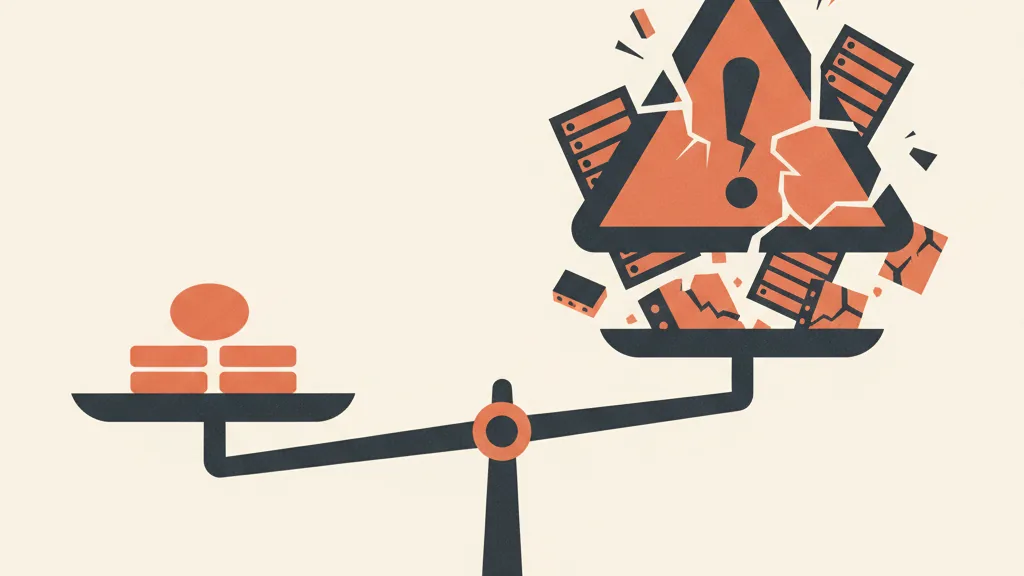
Now the part that changes the perspective. An audit isn't an expense you have to justify. It's an insurance premium you pay to avoid a much bigger bill later. And that later bill, in Italy, in 2026, is well documented.
According to the Clusit Report, Italy accounts for roughly 10% of incidents worldwide, with severe attacks up 23% in the first quarter and SMBs making up 72% of the targets. You're not "too small to be worth attacking." You're exactly the preferred target, because you're less defended than a large company and more solvent than an individual.
The average cost of a ransomware attack for an Italian SMB ranges between €35,000 and €250,000, and that's before even counting downtime, data loss, reputational damage, and potential fines. Let's put it side by side in a table.
| Item | Preventive audit | Incident suffered |
|---|---|---|
| Outlay | €3,000 - €30,000 one-off | €35,000 - €250,000 (SMB ransomware) |
| Operational downtime | None (business as usual) | Days or weeks of shutdown |
| Data | Protected, backups verified | Encrypted, exfiltrated, sometimes leaked publicly |
| Fines | Risk reduced (GDPR, NIS2) | Up to millions (Garante, ACN) |
| Insurability | Better risk profile, lower premium | Premium hike or policy refusal |
The ROI logic is pure arithmetic: if a €10,000 audit cuts the probability of a €100,000 incident by even 30%, the expected value of prevention comfortably beats the spend. And that's without counting the less visible but increasingly decisive advantage: insurability. Insurers offering cyber policies increasingly ask for proof of due diligence before accepting you or before keeping your premium from climbing. A recent audit is exactly that document. It's the gap almost no competitor connects the dots on, and for you it's real money.
Want to know what an audit tailored to your business would really cost, and what you're risking without one? Request an initial assessment with us: we'll give you a clear picture, no strings attached.
Combined NIS2 + GDPR + AI Act audit: why it pays off
In 2026 regulatory obligations overlap, and tackling them separately is a waste. NIS2 moves into its operational phase with baseline measures expected by October 2026 and mandatory incident notification from January 1, 2026, and it shifts responsibility directly onto the CEO and the board: it can no longer be delegated to IT. The AI Act (EU Regulation 2024/1689) becomes operational on August 2, 2026, with cybersecurity obligations for high-risk systems, oversight from ACN, and fines of up to €35 million or 7% of turnover. And underneath it all, GDPR keeps running, overseen by the Garante Privacy.
A combined audit that looks at technical security, NIS2 compliance, GDPR obligations, and AI usage together saves you money compared to three disconnected projects, and gives you a coherent picture of your legal and financial exposure. To find out whether these obligations apply to you, start with whether NIS2 applies to your business and the AI Act 2026 obligations for SMBs. If you want the full picture of the journey, our complete guide to cybersecurity audits for SMBs lays out every piece.
How to choose a provider (without wasting your money)
At the same price point, the difference comes down to who does the work. Three questions to ask before signing:
- Is this a manual audit or an automated scan? Ask how many hours of human work are involved. If they can't answer, it's a scan.
- What do I get at the end? A prioritized, understandable report, or the raw output of a tool. Ask for an anonymized sample.
- Do you cover the human factor and Shadow AI? If the audit ignores people and AI usage, it's looking at 2018, not 2026.
Be as wary of prices that are too low as of ones that are inflated. A serious audit for an SMB has a cost consistent with its surface and depth: neither a suspiciously good deal, nor an enterprise-sized invoice. For a reference overview of the industry, you can check the best cybersecurity companies in Italy in 2026, and for general context, the cybersecurity guide for SMBs.
In short
A cybersecurity audit for an Italian SMB realistically costs anywhere from a few thousand euros for a basic snapshot up to €30,000 and beyond for a full package with compliance and insurability coverage. It takes between 5 and 10 days of actual work. But the number to keep in mind isn't that one: it's the cost of a breach you could avoid, between €35,000 and €250,000, with legal liability now falling on you rather than your IT department. Seen that way, the only sensible question isn't "how much does the audit cost," but "how much does it cost me not to have done it."
Frequently asked questions
How much does a cybersecurity audit cost for an SMB?
It depends on surface and depth: €800-€3,000 for a basic scan, €3,000-€8,000 for an interpreted vulnerability assessment, up to €10,000-€30,000+ for a full audit with penetration testing and NIS2/GDPR/AI Act compliance.
How long does a full audit take?
For a typical SMB, between 5 and 10 working days of actual effort, spread across two or three calendar weeks, covering reconnaissance, technical analysis, human-factor testing, and report writing.
What's the difference between a €500 scan and a €15,000 audit?
The cheap scan is automated: software runs and prints a PDF. The expensive audit is manual: real analysts actually try to break in, filter out false positives, and give you a prioritized remediation plan. The difference is all the human work involved.
Is the audit worth it compared to the risk of an attack?
Yes. A ransomware attack costs an Italian SMB between €35,000 and €250,000, plus downtime and fines. If an audit cuts the probability of an incident by even 30%, the expected value of prevention comfortably beats the spend.
Do I need an audit for my cyber insurance policy too?
Increasingly, yes. Insurers ask for proof of due diligence before accepting you or before letting your premium climb. A recent audit is the document that improves your insurability profile: a concrete financial upside on top of the security itself.
Does the audit also cover the use of ChatGPT and other AI tools at work?
It should. 38% of employees paste confidential data into AI tools and 78% use their own unauthorized ones (Shadow AI). An audit built for 2026 checks this usage, which is a data-leak hole and a potential GDPR and AI Act violation.
Before choosing between a scan costing a few hundred euros and a serious audit, talk to us: together we'll size up your real exposure and propose the right scope for you.